
Alligator leather is the gold standard of exotic skins—prized for its iconic scale patterns and surprising softness. However, unlike standard leather, alligator skin is prone to “checking” (small cracks between the scales) if it isn’t properly hydrated.
Because an alligator coat is a significant investment, the goal of maintenance is twofold: preserving the glossy finish and ensuring the structural integrity of the hide. Here is your masterclass in exotic leather preservation.
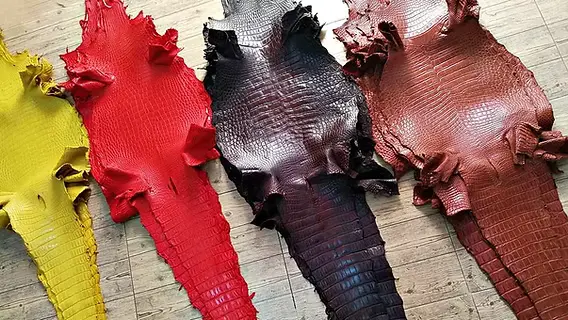
1. The “Light Touch” Philosophy
Exotic skins have a specialized finish (often a protein-based glaze) that can be easily stripped by household cleaners.
- Dusting: Use a soft, lint-free microfiber cloth to wipe the coat after every wear. Dust can settle into the grooves between scales and act like sandpaper over time.
- The Soap Taboo: Never use saddle soap or dish soap. These are too alkaline and will dissolve the natural membranes that hold the scales together.
- The “Against the Grain” Rule: When wiping the coat, always move with the direction of the scales, never against them, to prevent the edges from lifting or snapping.
2.Water is Not Your Friend
While the animal lives in water, the tanned leather hates it.
- If Caught in Rain: Immediately blot (do not rub) the moisture with a dry, white cotton towel.
- Drying Protocol: Hang the coat in a cool, dry place. Avoid the “Big Three” killers: Sunlight, Radiators, and Hairdryers. Direct heat will cause the scales to curl and the pelt to shrink irreversibly.
- The “Bubble” Risk: Excess moisture can cause the skin to “bubble” or delaminate. If this happens, do not touch it; take it to an exotic leather specialist immediately.
3. Choosing the Right Formula
Standard leather conditioners are often too heavy for alligator skin and can clog the pores or darken the delicate scales.
- Use Reptile-Specific Creams: Look for conditioners specifically labeled for “Reptile” or “Exotic” leathers (like Saphir Reptan or Bickmore Exotic). These are thinner and designed to penetrate the dense scale structure.
- Frequency: Condition your coat every 3 to 6 months, depending on your climate. If you live in a dry environment (like a heated home in winter), your coat needs more frequent “hydration.”
4. Preventing Permanent Creases
Alligator skin is more rigid than cowhide. Once a crack or deep crease forms, it cannot be “un-done.”
- Hang, Don’t Fold: Never fold an alligator coat. It should always be hung on a wide, contoured hanger to prevent stress on the shoulder seams.
- The Cotton Shield: Store it in a breathable cotton dust bag. Avoid plastic at all costs, as it traps humidity which can lead to mold or “rotting” of the hide.
- Humidity Control: Ideally, keep your storage area at 45–55% humidity. If it’s too dry, the skin cracks; if it’s too wet, it molds.
| Care Factor | Standard Leather | Alligator / Exotic |
| Cleaning | Damp cloth & mild soap | Dry microfiber cloth only |
| Conditioner | Heavy oils/waxes | Thin, reptile-specific creams |
| Flexibility | High (can be folded) | Lower (Never fold – will crack) |
| Sun Exposure | Fades over time | Dries out and curls scales quickly |