
Crocodile leather has a long-standing reputation for being stiff and difficult to wear in. Modern tanning has largely solved that problem, so when a crocodile bag does feel rigid, the real explanation usually has nothing to do with the leather itself.
4 min read | Crocodile Leather | Craftsmanship | Buying Guide
Summary
One of the most persistent misconceptions about exotic leather is that crocodile bag stiffness is simply unavoidable, a trade-off you accept for the prestige of the material. That belief is outdated.
Modern tanning technology has largely removed the natural stiffness once built into the skin itself. What actually determines how rigid a finished crocodile bag feels is mostly the shape and construction of the bag, not the leather. Understanding that distinction changes how you should evaluate a crocodile piece, and which finish to choose if softness is your priority.
The Skin
Bone Removal Technology
- Each scale contains a slight soft bone
- Bone creates the signature scale pattern
- Modern tanning removes it without losing shape
- Result: leather nearly as soft as cowhide
The Bag
Shape Drives Stiffness
- Structured bags like Birkin demand rigidity
- Long, straight panels need tight stitching
- Construction must hold the silhouette
- Stiffness here is a design choice, not a flaw
The Finish
Natural vs. Glossy
- Natural tanning gives the softest hand-feel
- Glossy finish adds a water-resistant layer
- That protective layer adds slight rigidity
- Choose finish based on softness priority
The Misconception Worth Retiring
Mention crocodile leather to most people and a familiar assumption follows: it must be stiff, heavy, and difficult to break in. This belief has shaped buying decisions for decades.
It is also largely out of date. Crocodile bag stiffness is far less a property of the leather itself than people assume, and the real cause is usually something else entirely.
What Actually Makes Crocodile Skin Naturally Stiff
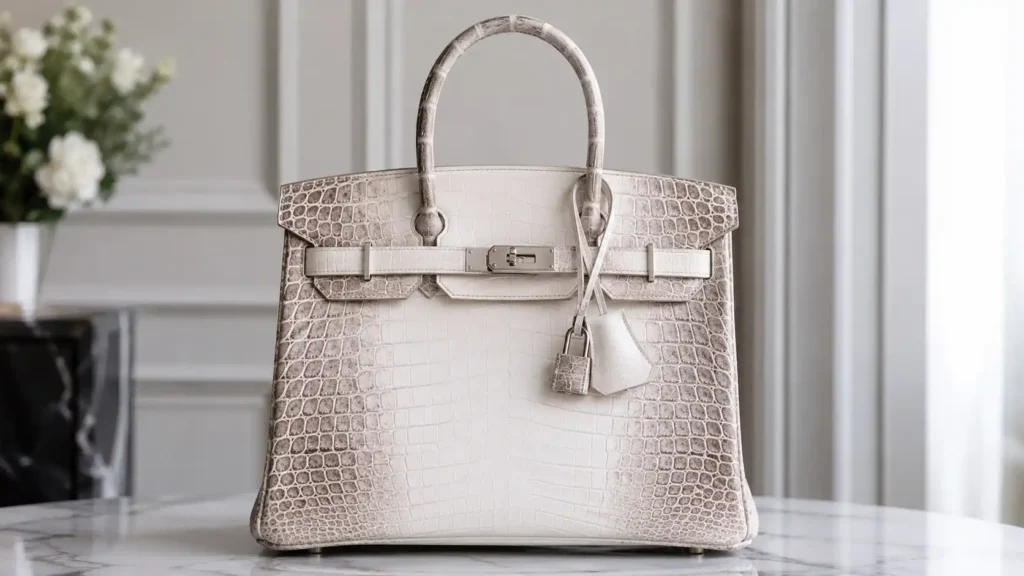
Crocodile skin has a unique structural feature that no other major exotic leather shares: each scale contains a slight soft bone. This is precisely what produces the raised, distinct scale pattern that makes crocodile leather instantly recognisable.
That same bone, however, is also the original source of the leather’s natural stiffness. For decades, there was no way to remove it without damaging the scale pattern that gives crocodile leather its value.
Modern tanning technology has changed that. Specialised processes can now remove the bone from each scale while preserving the surface pattern entirely, increasing the softness of the finished leather to a level that approaches cowhide, without sacrificing the look that defines crocodile leather.
The single biggest source of natural crocodile bag stiffness, the bone inside each scale, has effectively been solved by modern tanning. The leather itself is no longer the limiting factor it once was.
Why the Birkin Still Feels Stiff: It's the Shape
Ask someone to picture a stiff crocodile bag, and the Birkin almost always comes to mind first. That reputation is well earned, but the cause is widely misunderstood.
The Birkin’s silhouette is long, straight, and highly structured. To hold that shape, every seam and panel must be stitched and stretched with exceptional precision and tension. That construction requirement, not the leather itself, is what produces the rigidity people associate with crocodile bags.
A softer, more rounded silhouette made from the exact same leather would feel noticeably less stiff. Crocodile bag stiffness in pieces like the Birkin is a deliberate function of design, built to preserve a precise architectural shape, not evidence that the material is inherently rigid.
The shape of a bag dictates how much structural tension its construction requires. A long, straight silhouette like the Birkin will always demand a firmer build, regardless of how soft the underlying crocodile leather has become.
Choosing the Softest Finish: Natural Tanning
If softness is your priority when buying a crocodile leather piece, the finish matters as much as the bone-removal technology behind it.
Natural tanning produces the softest possible hand-feel, since it leaves the leather without an added protective surface layer. Glossy finishes, by contrast, apply a water-resistant coating that improves durability and shine, but that same layer introduces a small degree of additional stiffness.
For buyers seeking the most supple version of crocodile leather available, a natural-tanned finish, paired with modern bone-removal tanning, represents the softest combination the material can currently offer.
So Is Crocodile Leather Actually Stiff?
The leather itself, largely no. Modern tanning has removed the bone that historically caused crocodile skin to be rigid, bringing softness close to that of standard cowhide.
The bag, sometimes yes, by design. Structured silhouettes like the Birkin require tightly tensioned construction to hold their shape, and that is the true source of most crocodile bag stiffness people notice.
If softness matters most to you, look for a natural-tanned finish on a more relaxed silhouette, that combination delivers the most supple result the material can produce.
At J&A International, we work directly with tanneries using the latest bone-removal and natural-tanning techniques to deliver crocodile leather at its softest and most refined. Reach out to our Hong Kong team to discuss finishes and silhouettes suited to your preference.