A widely held misconception in the fur market is that natural fur only comes in a few basic colours, and that everything else is dyed. In reality, some of the most beautiful fur colours in the world are entirely natural. Here is what you need to know, species by species.
5 min read | Fur Coat | Buyer's Guide | Natural Fur Colours
Key takeaways
- Most fur colours are entirely natural: mink alone produces over eight distinct natural colour variations through selective breeding, with no tanning involved.
- Sable’s silvery sheen cannot be replicated: tanning actually destroys sable’s most prized quality, which is why the finest pieces are always left in their natural colour.
- Chinchilla is rarely tanned and expertly done when it is: the fur’s delicacy makes colour work technically demanding, so tanned chinchilla pieces reflect genuine skill.
- Lynx cat is almost never tanned but often faked: white fox with applied dots is a known fraud; look for natural variation and irregular spot shapes to verify authenticity.
- SOBOL and Furmark certification is your protection: these marks confirm ethical sourcing and give buyers a verifiable record of where their fur came from.
Mink: Widest natural colour range
Natural colours: White · Black · Brown · Silverblue · Silvercross · Pastel · Lavender · Violet
Tanned colours: Green · Bright Yello · Pink · Magenta · Other Bright Colour
Mink produces one of the most remarkable natural colour ranges of any commercially farmed animal. Black, white, brown, silver, pastel, lavender, and violet are all genuine natural fur colours, the result of selective breeding over decades.
When tanning is applied to mink, it is typically to brighten and enhance the existing natural tone rather than replace it entirely. Vivid fashion colours like pink, magenta, and bright yellow, however, are always tanned.
Sable: Naturally silvery, tanning diminishes it
Natural colours: Dark Brown · Medium Brown · Light Brown · Lanvender
Tanned colours: Dark Grey · Medium Grey · Other Bright Colour
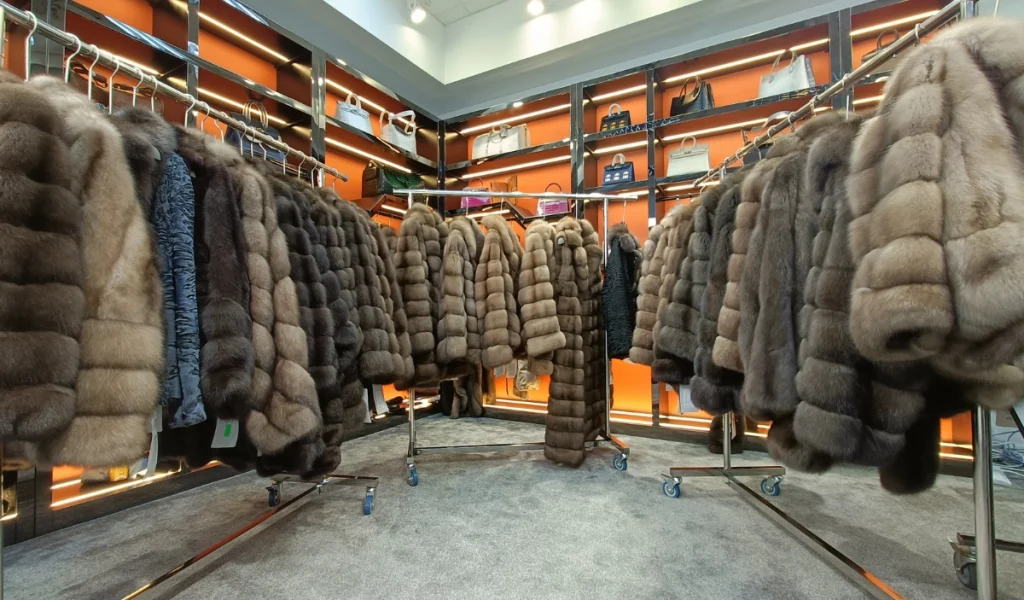
Sable natural fur colour ranges from light to dark brown. Its most prized quality, a natural silvery sheen that runs through the coat, cannot be replicated through tanning.
In fact, tanning actively diminishes the silvery quality that makes sable so desirable. As a result, the finest sable pieces are almost always left in their natural colour. The rare exception is dark grey tanning, used to create a more dramatic appearance.
Chinchilla: Delicate, rarely tanned, highly skilled when done
Natural colours: Black/White · Medium Grey/White · Light Grey/White(White)
Tanned colours: Green · Blue · Pink · Other Bright Colour
Chinchilla is best known for its dark-white to grey natural fur colour, a soft, layered tone that is far more complex than it first appears. Pure white chinchilla also exists naturally, though it is exceptionally rare.
The fur is so delicate that tanning it to any other colour is technically demanding. Consequently, chinchilla pieces in fashion colours like blue or pink are uncommon, and when done well, they represent the work of a highly skilled furrier. If you encounter tanned chinchilla, the quality of the work should be immediately evident.
Lynx Cat: Almost never tanned but frequently faked
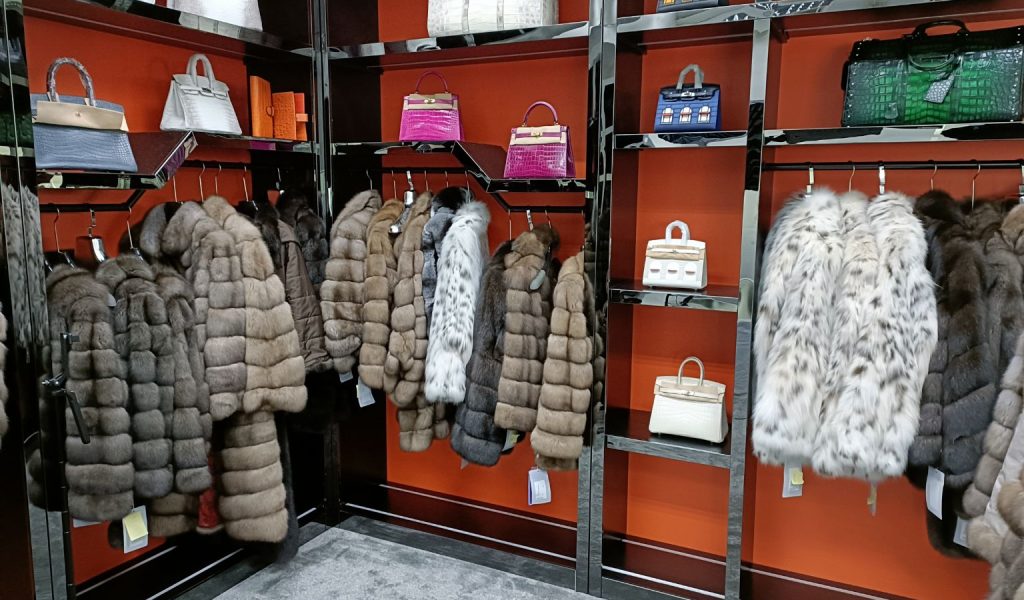
Natural colours: Orange Body · White Belly · Black Spot
Lynx cat is the one fur species where the natural colour is so distinctive that tanning it to something else is almost never done. The orange-and-white body with natural black spots is irreplaceable, no dye can recreate what the animal produces.
However, this is precisely the species most commonly subject to fraud. Unethical sellers sometimes take white fox fur and apply black dots by hand to simulate lynx cat belly.
How to spot fake lynx cat belly
Genuine lynx cat belly spots are never perfectly symmetrical. They vary in shape, size, and spacing, because they are natural, not applied.
If the black dots on a piece appear too uniform, too evenly spaced, or identical in shape, the fur is almost certainly not genuine lynx cat belly. Furthermore, real lynx cat spots have soft, graduated edges. Applied dots tend to have harder, more defined outlines.
When in doubt, ask for documentation, and walk away if none is provided.
Before you purchase any fur piece: Look for certification marks from SOBOL and Furmark, the two most recognised organisations for ethical fur sourcing. These certifications confirm that the fur was legally and responsibly obtained, and give you a verifiable record of the supply chain behind the piece.
Summary
Many buyers assume that natural fur colour is limited to a handful of shades, and that anything more interesting must have been dyed. This is a significant misconception.
Mink, in particular, produces one of the widest natural colour ranges of any animal in commercial farming. Sable, chinchilla, and lynx cat each have their own distinctive natural palette. Understanding what is real and what is tanned is essential for any serious fur buyer, and for spotting the outright fakes that do exist in the market.
Every fur piece at J&A comes with full sourcing credentials and is evaluated by our team for natural colour authenticity. Reach out to our Hong Kong team to find the right piece for you.