
Most fur types are riding a strong wave of demand right now, but coyote pelt is a notable exception. The reasons come down to its polarizing appearance and a very capable competitor sitting right beside it.
3 min read | Coyote Pelt | Market Analysis | Fur Industry
Article Summary
The fur market is broadly performing well right now, with many fur types seeing strong and rising demand. Coyote pelt, however, is sitting out that rally. Its distinctive and complex natural color pattern is genuinely polarizing, the kind of look that buyers either love immediately or walk past entirely.
Making things harder for coyote pelt is that fox fur sits right beside it in the market, offering a similarly bold fur experience but in a far wider range of colors. For buyers who want something striking without committing to coyote’s specific aesthetic, fox fur is an easy alternative. We think meaningful movement in coyote pelt pricing is still one to two years away, and only under specific conditions.
Coyote Pelt
Current Demand: Low
- Polarizing natural color pattern
- Bleaching cannot fully neutralize the complexity
- Limited appeal in today’s fashion climate
Fox Fur
Current Demand: Strong
- Available in silver blue, white, red, and more
- Bold look without a fixed color commitment
- Price creeping up steadily year on year
The Fur Market Is Performing Well, Except for Coyote Pelt
Across most of the fur industry, demand has been strong and prices have been climbing. Mink, sable, fox, and chinchilla are all moving well, and the broader sentiment in the market is genuinely positive.
Coyote pelt is not part of that story right now. While other fur types benefit from rising demand, coyote pelt continues to sit on the sidelines, and the reasons are specific enough to be worth understanding.
The Color Pattern Is the Core Problem
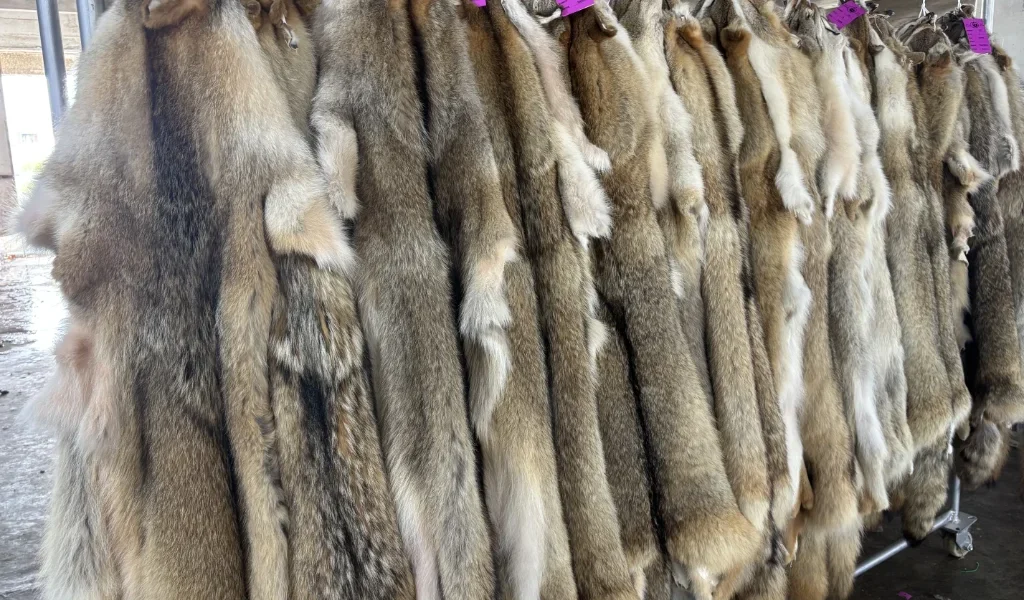
Coyote has one of the most distinctive natural color patterns of any fur animal: a layered mix of browns, greys, and creams that varies across the body and creates a complex, eye-catching effect. That complexity is precisely what divides opinion so sharply.
Buyers either connect with the coyote pelt look immediately, or they do not connect with it at all. There is very little middle ground, and in the current fashion climate, sophisticated and understated tends to win over bold and extroverted. Bleaching can lighten coyote pelt somewhat, but it cannot fully resolve the underlying pattern complexity, so the core aesthetic challenge remains.
Fox Fur Fills the Same Space More Flexibly
Any buyer drawn to the bold, expressive quality of coyote pelt will quickly notice that fox fur sits right beside it in the market, and fox fur comes in a far wider range of colors. Silver blue, white, red, and several other varieties give buyers genuine choice in how bold or how refined their look ends up being.
That flexibility makes fox fur a very easy alternative for buyers who want something striking but do not want to commit to the specific aesthetic of coyote pelt. Until something changes in that dynamic, coyote pelt will continue to lose those comparison moments.

Coyote pelt’s problem is not just that it is polarizing. It is that a more versatile alternative exists at a similar price point. Fox fur absorbs the demand that coyote pelt might otherwise capture.
What Would Need to Change for Coyote Pelt to Rise
There are two realistic scenarios in which coyote pelt could see meaningful price movement. The first is a broader shift in fashion direction, away from the current sophisticated, refined aesthetic and toward something more extroverted and statement-driven, where coyote pelt’s bold pattern becomes an advantage rather than a drawback.
The second, and arguably the more likely near-term scenario, is a significant rise in fox fur prices. Fox fur has been creeping upward year on year (see why fox fur prices surged 20%), and if that trend accelerates to the point where fox becomes noticeably expensive, buyers will start looking at coyote pelt as a genuine value alternative. That substitution effect is a real possibility and worth watching.
Our Outlook: Change Is Coming, but Not Yet
We believe it is still too early to call a turning point for coyote pelt right now. The conditions that would drive meaningful demand simply have not aligned yet, and the current fashion climate continues to work against it.
Within one to two years, however, we think the picture is likely to look different. Rising fox fur prices and gradual shifts in fashion direction are both real forces that could redirect attention toward coyote pelt in a meaningful way, much like the rise of alternative fur we are already seeing. It is a market worth keeping an eye on.
Why Coyote Pelt Is Waiting for Its Moment
The aesthetic is genuinely polarizing. Coyote pelt’s natural color complexity attracts some buyers strongly and loses others entirely, with little room in between.
Fox fur absorbs the demand. With more color options at a similar price point, fox fur captures the buyers who might otherwise consider coyote pelt.
The conditions for a turn are forming. Rising fox fur prices and a potential shift in fashion direction both point toward a coyote pelt recovery, likely within one to two years.
Interested in fox fur or other fur types performing strongly right now? J&A International’s collection is fully CITES certified, ethically sourced, and selected directly from trusted suppliers across Europe and beyond. Get in touch to ask about current stock.