
Most people assume fur colour treatment is a simple dyeing process — one colour applied to one pelt. The reality of modern sable fur dressing is far more sophisticated, and the results it produces are unlike anything the industry made a generation ago.
4 min read | Sable Fur | Craft & Innovation | Dressing Technique
Summary
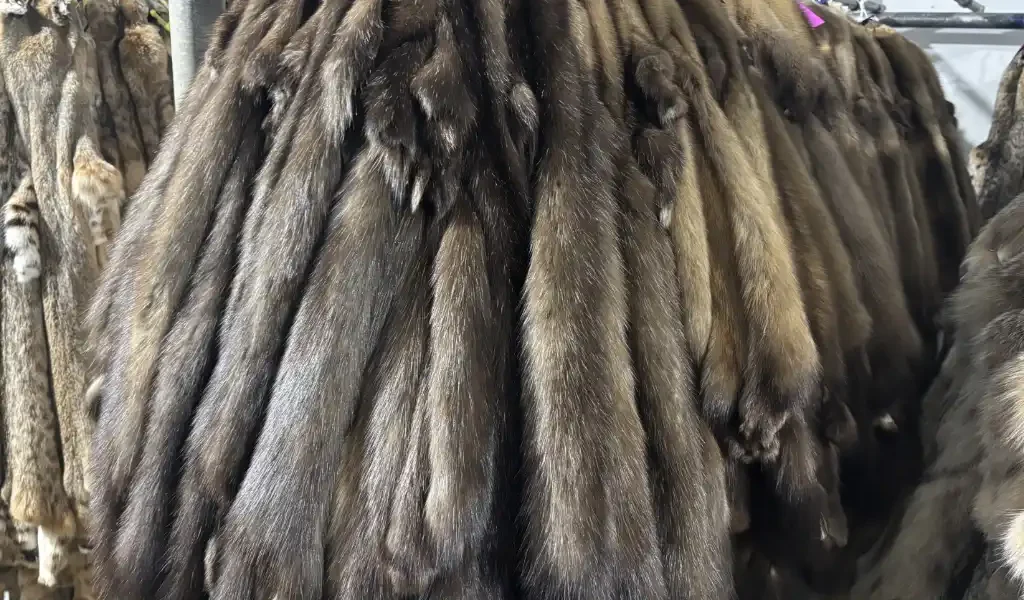
The most coveted quality in premium sable fur, the silvery, light-catching tips that run through the coat, only develops in animals that have lived through full seasonal cycles in the wild. Wild sable, however, comes with natural colour inconsistency that requires careful correction during the dressing process.
Where early sable fur dressing addressed that inconsistency with a single uniform colour, today’s most skilled dressers have moved somewhere far more ambitious: applying subtly different tones across the length of each individual hair, so the finished pelt shifts and moves with light the way the finest natural sable does in the wild. It is one of the most technically demanding skills in luxury fur craft — and it produces garments with a depth of character that single-colour dressing simply cannot achieve.
Early Dressing
Single Colour Per Pelt
- One flat colour applied to the whole pelt
- Corrected inconsistency, but lost dimension
- Uniform finish across the garment
- Simpler, less expressive result
The Challenge
Wild Sable's Contradiction
- Silvery tip only exists in wild sable
- Wild pelts are naturally inconsistent in colour
- Correction needed, but must preserve character
- The finest quality is also the hardest to work with
Modern Dressing
Multi-Tone Layering
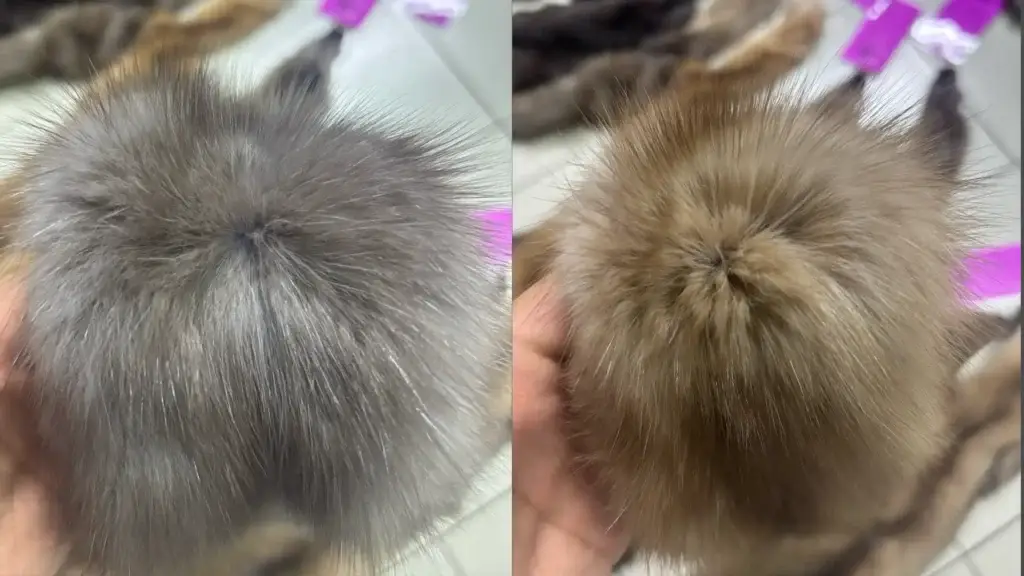
- Different tones applied across the hair length
- Colour shifts as the garment moves
- Depth and dimension impossible to achieve before
- The new benchmark for elite sable craft
Why Sable Fur Dressing Is More Complex Than It Looks
The assumption that fur dressing is a simple colouring process, like painting a wall, misses what makes it technically demanding at the highest level. Fur is not a flat surface. It is a dense, layered structure of individual hairs, each with its own length, thickness, and natural pigmentation. Applying colour to that structure uniformly, let alone with intentional variation across the hair length, requires a level of precision and expertise that takes years to develop.
For sable fur specifically, the challenge is compounded by the material itself. Sable has some of the finest, softest fur of any commercially used pelt, and fine fur absorbs colour differently than coarser fur. The dressing process must account for that sensitivity at every stage, or the result loses the silky quality that makes sable worth dressing in the first place.
The Silvery Problem and Why It Cannot Be Skipped
The silvery hair tip is the defining characteristic of premium wild sable fur, a luminous, light-catching quality at the end of each hair that gives the finest sable garments their distinctive shimmer. As covered in our piece on sable fur authenticity, this quality only develops in animals that have lived through full seasonal cycles in the wild.
Wild sable, however, is naturally inconsistent in colour. Each animal’s coat varies slightly in base tone, density, and the distribution of that silvery quality, and those variations accumulate visibly across a garment made from many different pelts. Without dressing intervention, the result is a patchwork of near-matching tones rather than the unified, harmonious expression a luxury garment demands.
Early sable fur dressing addressed this by applying a single uniform colour to each pelt, bringing consistency across the garment, but at the cost of the natural depth and variation that made the material worth sourcing from the wild in the first place. It solved one problem by introducing another.
The challenge of sable fur dressing is not simply correcting colour — it is correcting colour while preserving the dimensional quality that makes wild sable extraordinary. Those two objectives pull in opposite directions, and resolving them is where the finest dressers distinguish themselves.
The New Era: Multi-Tone Dressing
The shift that defines contemporary elite sable fur dressing came from a question that designers began asking: if sable fur moves so freely and so beautifully as the wearer walks, what would happen if the colour itself shifted across the length of each hair?
The answer, executed with sufficient skill, is a garment that behaves like a living surface. As the fur moves, as the wearer turns, walks, or steps between indoor and outdoor light, the subtle tonal variation across the hair length catches and releases light differently, creating the impression of depth and movement that no flat, single-colour dressing can produce.
This is the standard by which the finest sable fur dressing is now judged: not whether the colour is consistent, but whether it preserves and amplifies the natural dimensional character of the fur. A pelt dressed with multiple tones across its length, lighter at the tip, richer at the base, or graduated in any number of directions, becomes something qualitatively different from what single-colour dressing ever produced.
The benchmark for elite sable fur dressing has moved from consistency to dimension. The finest dressed pelts today are not those that look most uniform, they are those that move most beautifully when worn.
What This Means in a Finished Garment
For the person wearing a garment made from multi-tone dressed sable fur, the experience is unlike what any photograph can fully convey. Inside, in warm light, the garment reads with a rich, enveloping depth. Outside, in natural light, the same garment shifts, the tonal variation across each hair catching the light differently, the whole surface alive with subtle movement.
The crafter’s role in all of this is to match and arrange pelts dressed with compatible tonal gradients so that the movement reads as intentional and coherent across the full garment, not as a collection of individually interesting pelts, but as a unified expression of what the finest sable fur dressing and European craftsmanship can achieve together.
It is, in every meaningful sense, a new form of luxury, one that previous generations of fur craft could not have produced, and that only a small number of dressers and ateliers in the world can execute at the highest level today.
Why Dressing Quality Is Now a Primary Indicator of Garment Value
The raw pelt is only part of the story. Two garments made from the same grade of wild sable can look and feel completely different depending on the dressing quality applied. Multi-tone dressing, executed by a skilled European atelier, elevates the material to something the pelt alone cannot achieve.
Single-colour dressing is no longer the standard of excellence. It remains common and produces beautiful garments, but at the very top of the market, the benchmark has moved to dimensional, multi-tone technique that works with the natural movement of the fur rather than flattening it.
The garment you see hanging still tells you very little. The true character of a well-dressed sable fur garment only reveals itself in motion, and that is the experience worth seeking out before any purchase decision at this level.
At J&A International, every sable garment in our collection is crafted by European ateliers to the highest dressing standard, fully certified by SagaFurs, SOBOL, and FURMARK for authenticity and ethical sourcing. If you want to experience what the finest sable fur dressing looks like in motion, our Hong Kong showroom is the place to do it. Visit j-a-international.com to explore the collection.