
For decades, the crocodile leather industry operated in a grey area, caught between growing conservation concerns and surging luxury demand. Today, driven by stricter regulation, better farming practices, and remarkable technical advances, crocodile leather innovation is producing results the industry has never seen before.
6 min read | Crocodile Leather | Innovation | Exotic Leather
Scale Symmetry
Craft Precision
- Near-perfect bilateral pattern
- Minimal defects from better farming
- Porosus leading in consistency
Tanning
Colour & Softness
- Any shade achievable
- Exceptional softness across variants
- Rivals cowhide in suppleness
Finishing
Bold New Directions
- Gradient & multi-colour on one pelt
- Vivid & rainbow treatments
- Diamond inlay between scales
Usage
Waste Reduction
- Technology-assisted hide matching
- Defect detection in advance
- Higher yield per animal
Conservation
Population Recovery
- Farming prevents wild capture
- Mandatory wild release programmes
- Species populations now growing
CITES
Full Traceability
- Origin traceable to licensed farm
- Legal compliance at every stage
- Buyer confidence & transparency
An Industry That Had to Change and Did
The crocodile leather industry spent much of the late twentieth century under pressure. Concerns about the Saltwater crocodile’s survival triggered international attention, tighter regulations, and demands for accountability that the industry could not ignore.
What followed was not retreat, it was reinvention. Crocodile leather innovation accelerated precisely because the stakes were high. Stricter animal welfare standards, more sophisticated farming practices, and rapid advances in tanning and finishing have collectively produced an industry that looks very different from its earlier self.
1. Scale Symmetry: The Mark of a Better-Raised Animal
The quality of a crocodile hide begins long before it reaches the tannery. Animals raised in better conditions, with proper nutrition, space, and welfare standards, produce skins with more even, symmetrical scale patterns.
This is especially visible in Porosus leather today. The bilateral symmetry of the belly scales is now remarkably consistent, with minimal scarring or defects. That regularity is not accidental; it is the direct result of improved farming practice.
For luxury crocodile leather goods, scale symmetry is a primary quality marker. A more uniform pattern means less waste in cutting and a more refined final product.
Better animal welfare and better leather quality are not in tension, they are the same outcome. When farming conditions improve, the hide improves. Crocodile leather innovation at the farm level is inseparable from the quality of what reaches the atelier.
2. Tanning: Colour and Softness Redefined
Tanning is not just about colour. It determines how a hide feels, how it ages, and how it performs across decades of use. Advanced tanning has transformed all three dimensions of crocodile leather quality.
Modern tanneries can now achieve virtually any shade, from the deep naturals traditionally associated with the material to vivid, saturated tones that were previously out of reach. The dyeing process is more consistent and more controllable than ever before.
Softness has also improved significantly. Certain crocodile leather variants now approach the suppleness of cowhide, without sacrificing the structural character that defines the material. That combination is a genuine technical achievement.
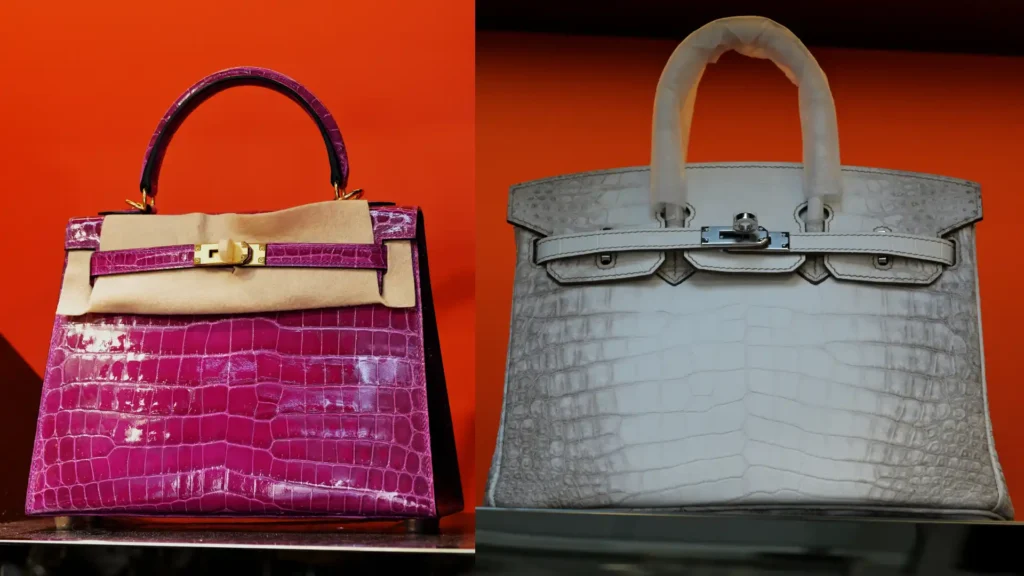
3. Finishing: From Classic to the Extraordinary
Finishing is where crocodile leather innovation is moving fastest, and producing its most visible results.
Historically, crocodile leather was finished in natural tones: black, tan, cognac, and a handful of muted classics. Today, finishing techniques can layer multiple colours on a single pelt, create seamless gradients, and produce vivid or even rainbow treatments that would have been technically impossible a generation ago.
The next frontier is already emerging. Hermès has introduced crocodile leather pieces with diamonds set between the scales, a finishing innovation that marks an entirely new milestone for the material and signals the direction the industry’s most ambitious houses are moving.
The diamond-inlay technique from Hermès is not simply a luxury flourish, it represents a fundamental rethinking of what crocodile leather can be as a canvas. When the material itself becomes a setting, crocodile leather innovation has crossed into jewellery territory.
4. Usage Optimisation: Technology Reducing Waste
Every crocodile hide is unique, and historically, matching hides for a multi-piece product required experienced eyes and a degree of accepted imprecision. Technology has changed that calculus.
Advanced detection and matching tools can now identify characteristics of a hide, scale size, symmetry, colour base, defect location, and optimise how it is cut and paired far earlier in the process. Less hide is wasted, more of each skin is used, and the final product achieves a higher level of consistency.
This matters both commercially and ethically. Reducing waste from each animal is one of the most direct ways the crocodile leather industry can demonstrate responsible stewardship of the material it depends on.
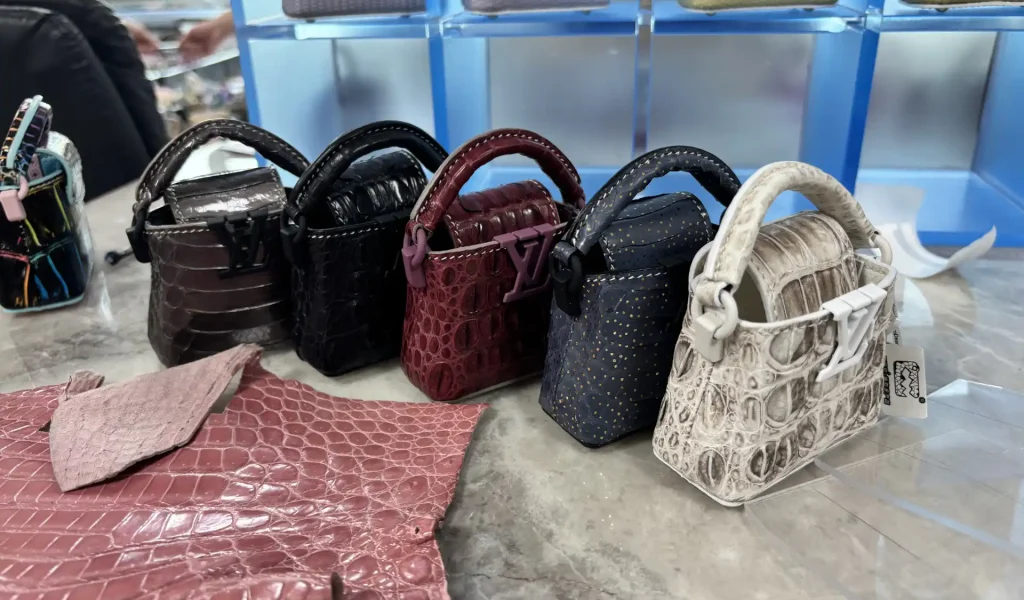
5. Conservation: Successfully Reversing Extinction Risk
The most consequential achievement of the modern crocodile leather industry may not be a tanning technique or a finishing method. It may be the recovery of wild crocodile populations.
Regulated farming removed the economic pressure to harvest animals from the wild. Strict licensing requirements ensured that only farms operating within approved welfare and environmental frameworks could supply the luxury market. And mandatory release programmes that require farms to return a percentage of animals to the wild have actively contributed to population recovery.
The Saltwater crocodile, once a species of serious conservation concern, now has a growing and stable population across its range. That outcome is directly linked to the regulatory framework that the crocodile leather innovation ecosystem helped create.
Regulated luxury demand, counterintuitively, has been one of the most effective conservation tools available for crocodilian species. A legal, well-governed market gives farming a commercial rationale, and farming removes the incentive to poach. The industry’s survival and the species’ survival turned out to be aligned.
6. CITES: Full Traceability as a Standard
CITES, the Convention on International Trade in Endangered Species, transformed the crocodile leather trade by making traceability mandatory rather than optional.
Every legitimate piece of crocodile leather in the luxury market today comes with documentation tracing it to a licensed farm, a regulated tannery, and an approved export chain. Buyers can verify the origin of what they purchase. Brands can verify the integrity of their supply.
This level of transparency was unimaginable in the industry’s earlier era. CITES certification is now the clearest signal that a crocodile leather product has been produced with full legal and ethical accountability at every stage.
Is the Crocodile Leather Industry Now a Model for Exotic Leather?
In many respects, yes. The combination of stricter regulation, genuine technological advancement, and measurable conservation outcomes makes it one of the most comprehensively reformed sectors in the luxury materials industry.
The grey area is largely gone. CITES certification, mandatory welfare standards, and population recovery data give buyers, brands, and regulators a clear picture of what the industry is and how it operates.
Crocodile leather innovation did not happen despite regulatory pressure — it happened because of it. That is a story worth understanding.
Summary
The crocodile leather industry once faced serious questions about its future. Rising extinction concerns for the Saltwater crocodile brought stricter regulations, and the industry responded with something unexpected: genuine innovation.
Crocodile leather innovation now spans six distinct areas, from more symmetrical scales and advanced tanning to extraordinary new finishes, smarter material usage, successful population recovery, and full CITES traceability. The result is an industry that is not just surviving scrutiny, but becoming one of the most exciting sectors in luxury materials.