
Most people assume the fur industry stopped innovating decades ago. The reality is the opposite: modern fur garment innovation has produced pieces that are lighter, more vibrant, and more technically ambitious than anything the industry made in its golden age.
5 min read | Fur Garment | Innovation | Craft & Design
Key takeaways
- Fur garment innovation is real and significant: the industry has undergone profound technical advancement in dressing, construction, and design over the past few decades.
- Modern fur coats can be up to 50% lighter: advances in dressing produce thinner, softer leather backing, enabling more precise construction and less wasted material.
- Colour consistency has been transformed: contemporary dressing technology eliminates the discolouration and uneven toning that were unavoidable limitations of earlier production methods.
- Design possibilities have expanded dramatically: fur can now be stretched and shaped with a precision that enables silhouettes and constructions that were structurally impossible fifty years ago.
- Innovation and craftsmanship are the same discipline: the technical advances in fur dressing are inseparable from the expertise required to apply them, which is why the finest modern pieces command the prices they do.
Weight
Up to 50% Lighter
- Thinner, softer leather backing
- Less excess material waste
- Greater wearability & comfort
- No sacrifice to warmth or durability
Colour
Richer & More Uniform
- Advanced dressing eliminates discolouration
- Even dye absorption across the full pelt
- Deeper, more harmonised tones
- Consistent finish across all panels
Design
Previously Impossible
- Fur can now be stretched & shaped
- New silhouettes & structural forms
- Intarsia, laser-cut & mixed-media work
- High-expertise techniques expanding yearly
The Misconception That Holds Back Understanding
Ask most people what has changed in the fur industry over the past fifty years, and you will rarely hear fur garment innovation mentioned. The assumption is that not much has changed, perhaps a new pattern, a different cut.
That assumption is wrong. The technical craft behind every modern fur garment has been transformed. The coat in a contemporary atelier today shares a name with its 1980s predecessor, but it is a meaningfully different object.
1. Weight: Up to 50% Lighter
Pick up a vintage fur coat from the 1980s and the first thing you notice is the weight. Beautiful, but wearing one for two or three hours puts real strain on the shoulders.
Today’s fur garments can be up to 50% lighter. Improved dressing techniques produce leather that is thinner and softer without losing structural integrity.
That softer backing also gives craftspeople more precision in cutting, less excess, less waste, and a cleaner final construction.
Weight reduction in modern fur garment innovation is structural, not cosmetic. A lighter backing means more accurate craftsmanship, each panel sits cleaner, and the finished piece wears better and lasts longer.
2. Colour: Richer, Deeper, and Perfectly Uniform
In vintage fur, colour was always a negotiation with imperfection. Dressing technology of the era meant that some areas of a hide absorbed dye unevenly, and slight discolouration across panels was simply accepted.
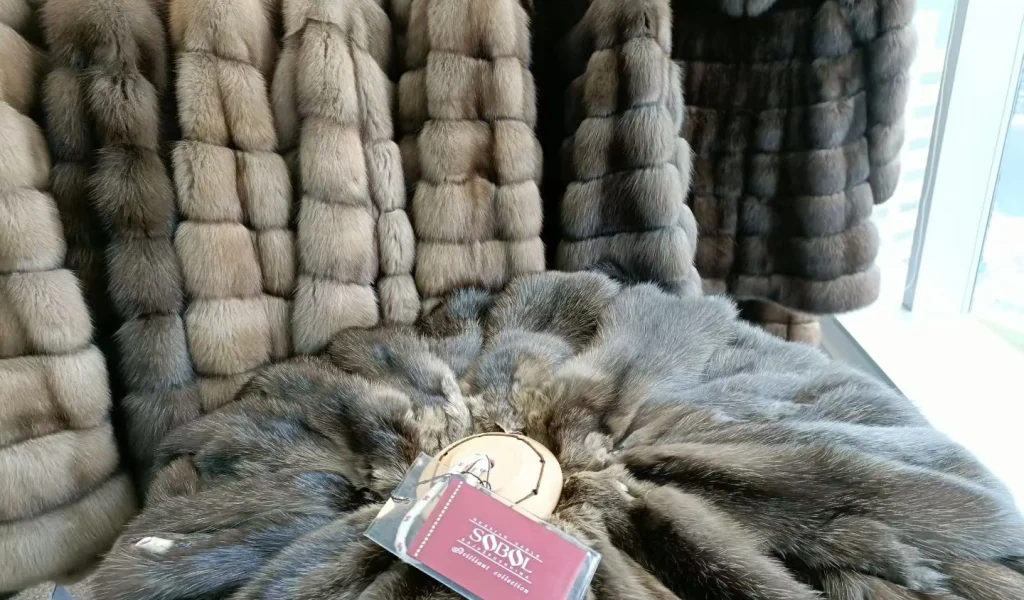
Modern dressing has made that compromise obsolete. Hides now reach a far more uniform surface quality, and dye absorbs evenly across the full skin.
The result for any contemporary fur garment is colour that reads as one continuous, harmonised expression, not a patchwork. That consistency is also a mark of value.
3. Design: Silhouettes That Were Once Impossible
Of all areas of fur garment innovation, design freedom may be the most exciting. Fur has always been a difficult material, heavy, directional, and resistant to shaping. Those limits defined what couturiers could attempt.
Specialised modern dressing techniques have changed that. Fur can now be stretched, shaped, and manipulated with genuine control. Silhouettes that were structurally impossible fifty years ago are now achievable.
The creative vocabulary of fur garment design is still expanding, and the ceiling has not yet been found.
When the material can be manipulated more precisely, the designer’s vision is no longer constrained by what the hide will tolerate. Fur garment innovation and craft innovation are, in this sense, the same discipline.
Is Modern Fur Better Than Vintage?
In technical terms, yes. Lighter, more uniform in colour, more precisely constructed, modern luxury fur outperforms its predecessors on every measurable dimension.
Vintage pieces retain their character. The density of an 80s mink coat carries its own presence. But that presence was a product of limitation; today’s craftspeople can achieve it without the compromises.
Fur garment innovation has not replaced what made vintage pieces extraordinary. It’s the representation of relentless innovation
Summary
The fur industry carries the reputation of a trade frozen in tradition. In the public imagination, fur garment innovation begins and ends with a new pattern or a different silhouette. That perception is decades out of date.
Advances in fur dressing technology have fundamentally changed what a fur garment can be, how little it weighs, how purely it holds colour, and how boldly it can be designed. The modern luxury fur coat is a genuinely different object from its vintage counterpart, and understanding why helps explain why the finest pieces command the prices they do.
At J&A International, every fur garment we create reflects the full depth of modern craft, lighter, more precisely coloured, and more ambitiously designed than previous generations made possible. Each piece is certified by CITES, FURMARK, and SAGA Furs. Reach out to our Hong Kong team to explore the collection.