In the exotic leather world, softness is not simply a matter of comfort. It is one of the clearest indicators of quality, craftsmanship, and the grade of hide a maker was willing to work with.
Key takeaways
- Softness communicates quality before anything else: the feel of crocodile leather at first touch tells an experienced buyer more than the pattern or colour alone.
- Soft crocodile leather shapes more precisely: it is the foundational material requirement for the finest handcrafted pieces, where every edge and curve must be exact.
- It ages more gracefully: soft leather flexes rather than creases, protecting the piece from the permanent stress marks that degrade stiffer hides over time.
- Softness proves the tanning is exceptional: it leaves no room to hide imperfections, making it the most honest quality indicator in the entire crocodile leather grading process.
1. It Feels Better and That Matters More Than It Sounds
At the most fundamental level, soft crocodile leather simply feels better to wear and carry.
Luxury goods are tactile objects. The moment a buyer picks up a bag or slips on a pair of shoes, the feel of the material communicates quality before the eye has registered anything else.
Beyond the initial impression, softness also has a practical dimension. In shoes and garments, soft crocodile leather moves with the body rather than against it, reducing the risk of chafing, pressure points, and the kind of discomfort that makes even a beautiful piece unwearable in practice.
2. Softer Leather Shapes More Precisely
In craftsmanship terms, soft crocodile leather is a fundamentally better raw material to work with.
The softer the hide, the more precisely it can be shaped, folded, and formed to the maker’s intention. Stiff leather resists the craftsperson’s hands, it approximates the desired form rather than achieving it exactly.
Consequently, the finest crocodile leather pieces, where every curve, seam, and edge must be perfect, are almost always made from the softest available hides. Softness is not a luxury add-on; it is the foundation that makes exceptional craftsmanship possible.
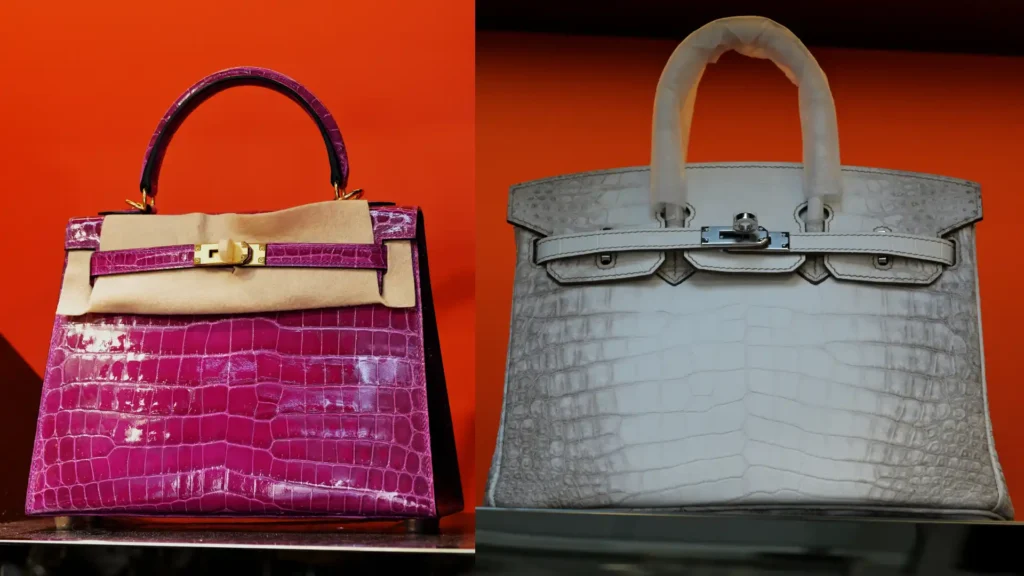
3. It Is Less Likely to Crease or Fold Unintentionally
This is one of the less obvious but genuinely important advantages of soft crocodile leather.
Stiffer leather resists bending up to a point, and then creases sharply and permanently when that resistance is overcome. A hard fold in a stiff hide leaves a mark that rarely fully recovers.
Soft crocodile leather, on the other hand, flexes and moves with handling rather than fighting it. As a result, it is significantly less susceptible to the accidental creases and stress marks that degrade the appearance of a piece over time. In other words, softer leather ages more gracefully.
4. It Is Proof of Superior Tanning
Of all the reasons softness matters, this one is the most revealing to those who understand the craft.
Achieving genuine softness in crocodile leather is technically demanding. Each scale has its own hidden fold, the small crease where the scale meets the skin beneath. To tan the hide to a truly supple finish, the craftsperson must work each of these folds individually, ensuring the treatment penetrates fully and evenly across the entire surface.
Stiffer crocodile leather, by contrast, can conceal inadequate tanning behind its own rigidity. The stiffness masks what the softness would reveal.
Furthermore, a perfectly tanned soft crocodile leather hide leaves nowhere to hide imperfections in colour or texture. Everything is visible. As a result, softness is not just a quality indicator, it is a transparency test that only the finest tanning work can pass.
When a maker presents you with genuinely soft crocodile leather, they are showing you that their tanning is good enough to withstand full scrutiny. That confidence is itself part of what you are paying for.
Every crocodile leather piece at J&A is evaluated for softness as a primary quality criterion, with ethical farming and a CITES certificate. Reach out to our Hong Kong team to find a piece that meets the standard.