Most fur pelts on the market today come from farms, but wild fur still plays a role, and for certain species, it is the only option. Understanding the difference helps you buy more knowingly and appreciate why some pelts command the prices they do.
5 min read | Fur Sourcing | Education | Buying Guide
Summary
The distinction between wild fur and farm fur is one of the most fundamental in the industry, and one of the least understood by buyers outside the trade. Both exist, both serve important roles, and neither is universally superior. The right answer depends entirely on the species and what you are looking for in the finished garment.
For most commercial fur species, farming produces more consistent, higher-grade pelts than wild trapping. But for animals that cannot be farmed, like lynx cat, wild sourcing is the only option. And for species like Russian sable, wild fur actually produces qualities that farm fur cannot replicate, making it the more prized source for the finest pieces. This article breaks down the four key differences buyers should understand.
Wild Fur
Trapped & Regulated
- Government-regulated trapping programmes
- All traps registered to protect wild populations
- Variable pelt quality; animals face seasons
- Only source for certain aggressive species
- Unique colour qualities impossible to farm
Farm Fur
Controlled & Consistent
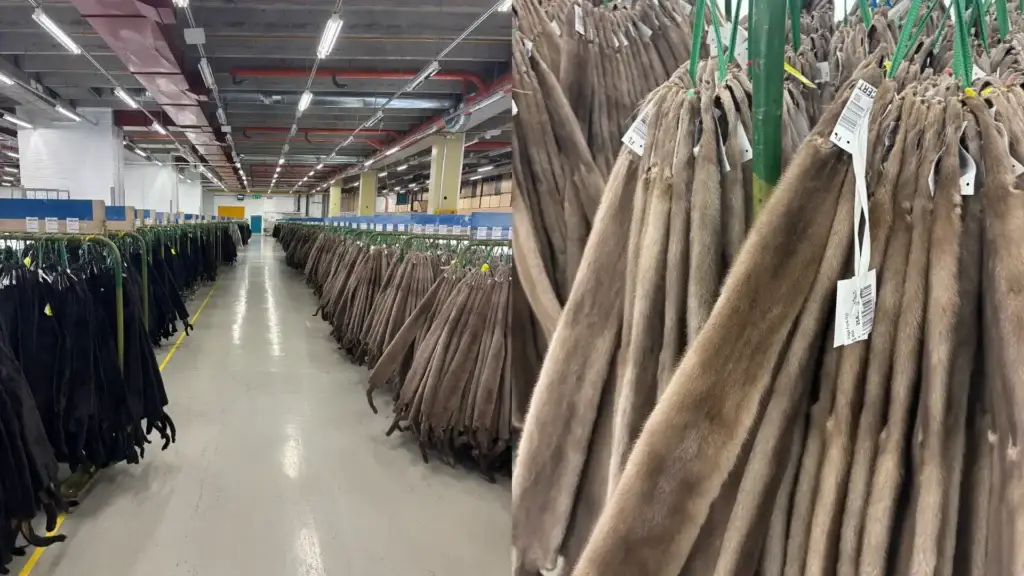
- Controlled environment; diet, health, space
- Consistent quality across a full season’s output
- Grading more reliable; fewer surprises
- Suitable for most commercial fur species
- Generally commands higher per-pelt prices
1
Quality
Farm Usually Wins
Wild animals go through seasonal shedding, fighting, and breeding, all of which affect pelt condition. Farm-raised animals are protected from these variables, producing more reliably graded, higher-consistency pelts in most species.
2
Rare & Wild-Only Species
Some Cannot Be Farmed
Certain animals, lynx cat being the clearest example, cannot be raised in farm conditions. Their stress response to captivity makes farming impractical and harmful. For these species, wild trapping under government regulation is the only source. Russian sable is the reverse case: farmable, but the prized lighter, silvery colour that defines premium sable only develops through wild seasonal living, making wild sable the most coveted tier.
3
Consistency
Farm Has the Advantage
Wild fur is subject to nature; you cannot control what the season produces. Farm fur allows operators to manage diet, health, and environment, producing far more predictable and consistent output. This is why most commercial garment production relies on farm-sourced pelts.
4
Price
Depends on the Species
For mink, wild-caught pelts typically trade below farm-raised equivalents, reflecting the less reliable quality. But for sable, wild-caught commands a premium; the lighter colour and silvery character that only wild living produces are the most desirable qualities in the market. Origin and species determine which commands more.
Wild Trapping Is Not Unregulated
A common misconception about wild fur sourcing is that it operates outside of meaningful oversight. In reality, wild trapping in the major fur-producing regions operates under strict government regulation designed to protect wild animal populations and maintain ecological balance.
All traps must be registered. Wildlife authorities set quotas based on population assessments, and trappers operating outside those quotas face serious legal consequences. The system is not perfect in every region, but certified wild fur, traceable to regulated programmes, is a legitimate and responsibly managed part of the industry.
At J&A, we source wild fur only from suppliers whose material can be verified through recognised certification programmes. Documentation of origin and compliance is part of every purchase.
The Sable Exception: When Wild Is Better
For most fur species, farming produces the superior commercial product. Russian sable is the industry’s most compelling exception to that rule, and understanding why illuminates something important about how the natural environment shapes fur quality.
Farm sable produces beautiful fur. The pelts are darker, richer in tone, and consistent across a production season. For buyers who want depth of colour, farm sable delivers it reliably.
But the most coveted quality in premium Russian sable. The lighter, varied shading and the distinctive silvery hair tip that catches light in a way no other fur quite matches, only develops in animals that have lived through full seasonal cycles in the wild. The shedding, the cold, the natural rhythm of a Siberian winter produces a coat quality that farming simply cannot replicate.
Wild sable therefore commands a premium above farm sable at the top of the market, not despite being wild, but because of it.
The silvery quality of premium wild fur sable is not something that can be farmed into existence or replicated through dressing. It is a product of the animal’s lived environment, which is precisely why it occupies the top tier of the sable market.
Lynx Cat: When Farming Is Simply Not Possible
At the other end of the spectrum from sable sits lynx cat, a species where the question of wild fur versus farm fur has only one answer: wild.
Lynx cats are aggressive, highly territorial animals. Raising them in farm conditions, in close proximity to others of the same species, creates extreme stress, frequent conflict, and significant risk to both the animals and the farmers managing them. No commercially viable lynx cat farming operation exists, and none is likely to emerge given the fundamental nature of the animal.
Every lynx cat garment in the market comes from wild-trapped animals, sourced under government regulation. This is one of the reasons lynx cat commands such exceptional prices, particularly for the prized all-white and all-black belly pelts, and why supply is so genuinely constrained.
Which Is Better; Wild or Farm?
For most species, farm fur offers more reliable quality. Controlled conditions produce consistent, well-graded pelts that perform predictably through the dressing and crafting process. For commercial garment production, farm fur is the foundation.
For some species, wild fur is irreplaceable. Lynx cat cannot be farmed. Wild sable produces colour qualities that farming cannot replicate. In these cases, wild fur is not just an alternative; it is the only source for the most prized material.
Origin matters, and so does certification. Whether the fur in a garment is wild or farm-sourced, what matters most is that its origin is documented, its sourcing is regulated, and the supplier can verify both. That transparency is the standard every serious buyer should expect.
At J&A International, we carry both farm-sourced and regulated wild fur garments, with full certification of origin and ethical sourcing across every piece. Whether you are drawn to the consistency of premium farm mink or the irreplaceable character of wild sable and lynx cat, our Hong Kong team can guide you to the right choice. Visit j-a-international.com to explore the collection.