
For decades, a fully natural colour was considered the gold standard of a quality fur coat. That thinking made sense when it was formed, but fur dressing technology has moved so far beyond those limitations that the rule no longer applies.
4 min read | Fur Garment | Craft & Innovation | Buying Guide
Summary
The belief that a genuine luxury fur coat must be entirely natural in colour is a relic of an era when fur dressing technology simply could not achieve anything better. In the 1990s, that rule was reasonable, the tools available meant that colour alteration was often visible, uneven, and a legitimate signal of lower quality.
Today, that is no longer true. Modern fur coat dressing techniques have advanced to the point where colour correction, used primarily to ensure perfect consistency across all pelts in a garment, is invisible even to professionals at casual inspection. The chemicals used are held to the highest safety standards and present virtually no risk of irritation to the wearer. Colour correction is not a compromise. In many cases, it is a mark of craftsmanship.
Vintage Era
Why Natural Was the Rule
- Dressing technology was limited
- Colour alteration was often visibly uneven
- Discolouration common even in natural pelts
- Altered colour was a genuine quality signal
Today
Invisible to the Eye
- Correction indistinguishable from natural colour
- Used primarily for cross-pelt consistency
- Perfect colour matching across all panels
- Trained professionals struggle to spot it
Safety
Held to the Highest Standard
- All chemicals certified to strict industry standards
- Virtually no risk of skin irritation
- Certified by recognised organisations
- Safe for everyday wear and prolonged contact
Where the Rule Came From and Why It Made Sense Then
The preference for fully natural fur coat colour was not arbitrary. In the decades when it formed, most strongly through the 1980s and 1990s, fur dressing technology genuinely could not produce colour alteration at a quality that looked convincing alongside untreated pelts.
The result was that colour-corrected or dyed fur often showed tell-tale signs of treatment: slight unevenness in tone, inconsistency at the panel edges, or a flatness that lacked the depth of natural fur. For buyers and craftspeople of that era, colour alteration was a reliable proxy for a garment that had not been made from the finest material.
That was a fair judgement at the time. The problem is that the technology has moved enormously since then, and the judgement has not been updated to match.
What Modern Fur Dressing Can Now Achieve
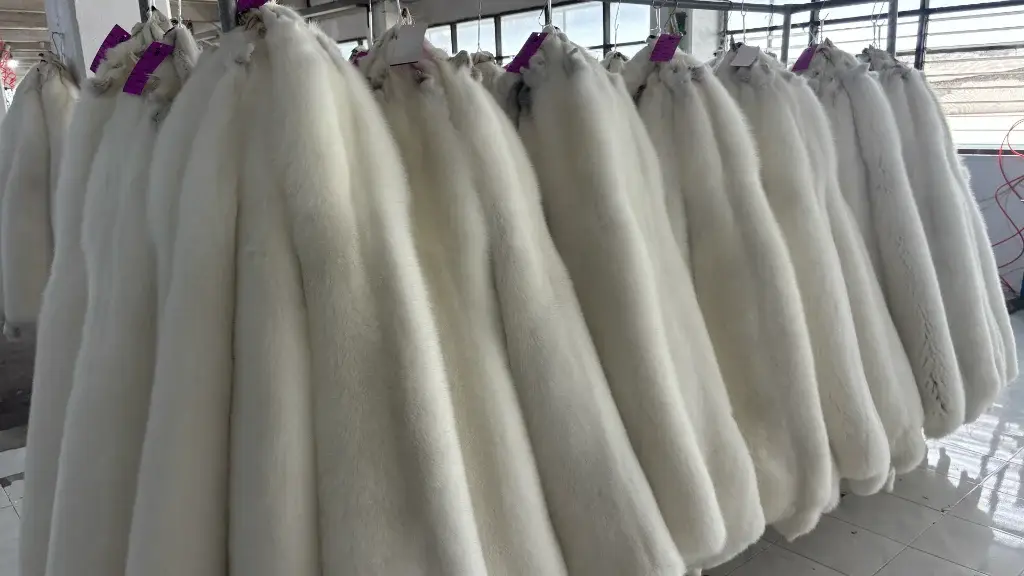
Today’s fur dressing techniques have effectively closed the visible gap between natural and colour-corrected pelts. The primary use of colour treatment in a modern fur coat is not to disguise lower-quality material, it is to achieve perfect consistency across all the pelts that make up a garment.
No two fur pelts are identical. Even within the same lot from the same farm, subtle natural variation in tone exists across individual skins. In a finished garment made from fifteen or twenty pelts, those variations can accumulate into visible inconsistency across panels, a patchwork effect that the finest craftspeople spend considerable effort avoiding.
Colour correction at the dressing stage is the most effective solution. Applied carefully, it brings all pelts in a garment to a harmonised, unified tone, and the result is a fur coat whose colour reads as one continuous expression rather than a collection of near-matching pieces.
In a well-made modern fur coat, colour correction is not a concession to lower quality; it is part of what produces the flawless colour consistency that distinguishes the finest contemporary garments from vintage pieces made without these tools.
What Vintage Coats Reveal Under a Trained Eye
One of the clearest ways to understand how far dressing technology has come is to examine vintage fur coats alongside modern pieces. For most wearers, both look beautiful. For a professional eye, the difference becomes apparent quickly.
Vintage fur coats, even the finest examples, almost always carry slight colour discolouration across their panels. Matching pelts perfectly without colour correction was extraordinarily difficult, and the natural variation between skins shows across panel seams in ways that were simply accepted as inevitable at the time.
Those subtle inconsistencies do not exist in today’s finest garments. The colour reads as seamless, unified, and intentional from the first panel to the last, and that consistency is a direct product of modern dressing capability, not a departure from quality.
The slight discolouration visible in vintage fur coats was not a sign of inferior craft; it was the honest limit of the technology available. Modern dressing removes that limit entirely, and the result is a more visually perfect garment than any previous era could reliably produce.
Safety: What the Chemicals Are and Are Not
For buyers with concerns about chemical treatments in their fur coat, the relevant facts are straightforward. The dressing chemicals used in modern fur colour correction are held to strict industry safety standards, certified by recognised organisations and tested for skin compatibility.
The risk of irritation from a correctly dressed and certified fur garment is extremely low, effectively negligible for the vast majority of wearers. The same certification bodies that verify ethical sourcing and species authenticity also cover the chemical standards applied in dressing, which means a certified garment from a reputable source carries documented assurance across all of these dimensions.
At J&A, every garment we carry is certified by recognised industry organisations. The documentation is available, and we are happy to share it with any buyer who wants to review it before purchasing.
Should Colour Correction Change How You Evaluate a Fur Coat?
Yes, but in the opposite direction most buyers assume. In the vintage era, visible colour treatment was a signal of lower quality. Today, invisible colour correction is a sign that the crafter cared enough to achieve perfect panel consistency across the finished garment.
The right question is not whether colour was corrected. It is whether the correction was done well, and whether the garment carries the certifications that confirm the dressing chemicals meet the safety and quality standards that the finest producers adhere to.
Natural colour remains beautiful. But it is no longer the sole standard by which a fur coat’s quality should be measured, and buyers who hold to that old rule are excluding some of the finest pieces the modern industry produces.
At J&A International, every fur garment in our collection is certified by recognised industry organisations covering authenticity, ethical sourcing, and dressing standards, so you know exactly what you are wearing and where it came from. Reach out to our Hong Kong team or explore the full collection at j-a-international.com.