
For years, the forced culling of Denmark’s entire mink population left a void that the global fur industry has quietly felt. Now, with auction prices surging and veteran producers preparing to re-enter, Danish mink farming is finding its way back.
5 min read | Mink Fur | Market Update | Supply Chain
Article Summary
Before Covid-19, Danish mink farming stood among the finest in the world, producing pelts that rivalled North American mink in quality and commanded respect at every major auction house. Then, in a matter of months, the entire industry was gone.
A government-mandated culling in 2020 eliminated Denmark’s mink population entirely. What followed was years of oversupply, collapsed pelt prices, and real hardship for fur farmers across the world. But the market is shifting. The March 2026 SAGA Furs auction showed the clearest signal yet that the cycle has turned, and Danish mink farming expertise, relocated and rebuilt, is preparing to re-enter the stage.
Pre-Covid
Denmark at Its Peak
- One of the world’s top mink producers
- Pelts rivalling North American quality
- Decades of accumulated farming expertise
- Strong presence at SAGA Furs auctions
2020–2025
Collapse & Recovery
- Full national cull, no mink remaining
- Flood of pelts crashed global prices
- Prices below cost of production since 2019
- Years of financial strain on global farmers
2026 Onwards
The Turning Point
- Male pelt prices up ~50% at SAGA March auction
- Female pelt prices up ~80% at same auction
- Danish producers relocating to Poland
- Rising competition set to lift average quality
What Denmark Lost and Why It Mattered
To understand why the return of Danish mink farming is significant, it helps to understand what the industry lost when Denmark exited the market.
Danish mink had spent decades building a reputation for consistent, high-grade pelts. The combination of climate, feed quality, and crucially, generational farming knowledge produced fur that competed at the very top of the global market, alongside the finest North American producers.
That expertise does not disappear overnight. It travels with the people who built it.
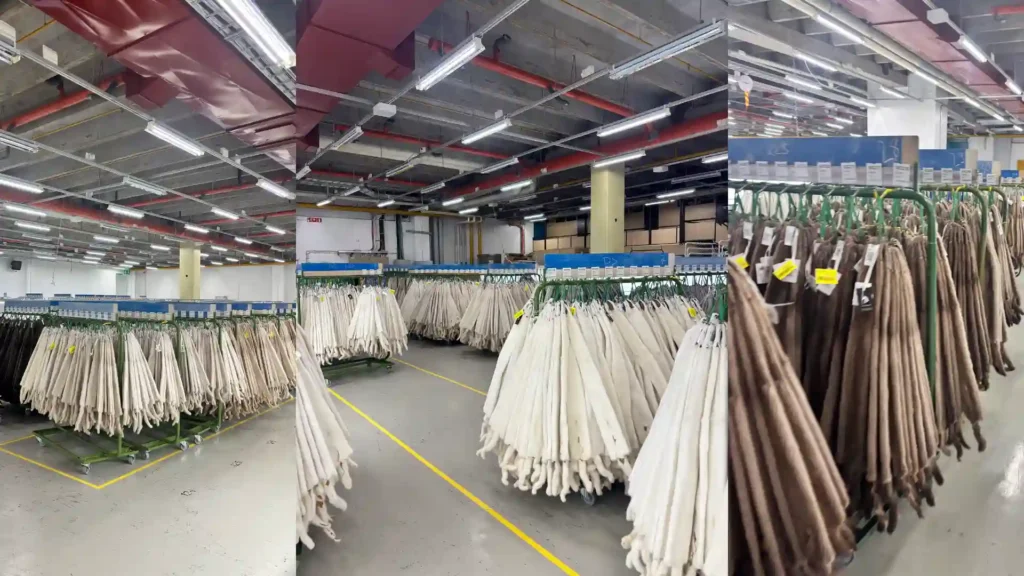
The Covid Culling: What Actually Happened
In late 2020, the Danish government ordered the culling of the country’s entire mink population, an estimated 15 to 17 million animals, following concerns that a mutated strain of Covid-19 was circulating among the farmed mink and posed a risk of transmission back to humans.
For Danish mink farming families, the impact was immediate and severe. The culling was carried out rapidly, and the sudden release of a vast number of pelts into the market, at a time when luxury demand was already under pressure, drove prices down sharply.
Pelt prices had already been under stress since 2019. The culling made the situation significantly worse, pushing prices below the cost of production and leaving farmers across the world, not just in Denmark, absorbing losses year after year.
The collapse of Danish mink farming was not a gradual decline. It was an overnight elimination of one of the world’s great fur-producing nations, and the price effects rippled through the global market for years.
The SAGA Furs Auction: The Signal the Market Needed
The March 2026 SAGA Furs auction delivered the clearest evidence yet that the market has fundamentally changed. Male mink pelt prices rose by approximately 50% compared to recent cycles. Female pelt prices rose by approximately 80%.
For farmers who have endured years of below-cost pricing, these numbers represent more than a market correction; they represent the first real financial breathing room since before the COVID period.
The price recovery reflects tightening supply, recovering luxury demand, and the absence of the distortion that the 2020 emergency culling created. The fundamentals that support quality mink fur production are reasserting themselves.
A near-80% price recovery on female mink pelts in a single auction cycle is not noise. It is a structural signal that the years-long oversupply hangover from the Danish cull has finally cleared, and that the market is repricing accordingly.
Danish Expertise Returns: Via Poland
The most compelling development for the long-term future of Danish mink farming expertise is not happening in Denmark, at least not yet. Several of Denmark’s established producers are now planning to resume operations by relocating their farms to Poland.
The logic is straightforward. Danish mink farming regulations remain restrictive following the culling, but the knowledge, breeding stock management expertise, and quality standards cultivated over decades travel with the farmers themselves.
What Poland gains is not simply new farms; it gains access to some of the most experienced mink producers in the world, operating with the standards and methods that made Danish mink a benchmark for the industry. Within a few years, this re-entering expertise is likely to raise both the competitive intensity and the average quality ceiling of European mink production.
What This Means for the Luxury Fur Market
Supply is tightening, and prices are reflecting it. The years of below-cost pelt pricing are ending. The SAGA March auction results confirm that the market has absorbed the post-culling oversupply and is now repricing toward sustainable levels.
Competition will lift quality across the board. When Danish-standard producers re-enter the European supply chain, the competitive pressure on all producers to maintain or raise their quality will intensify. For buyers, that is an excellent outcome.
Danish mink farming expertise never disappeared — it simply waited. The knowledge, the standards, and the people who built Denmark’s reputation are re-entering the market. The industry will be stronger for it.
At J&A International, we track the global mink fur market closely, from auction results to sourcing shifts across Europe and North America. Our Hong Kong team works directly with certified SAGA Furs and FURMARK suppliers to ensure every piece meets the standard of the material demands. Reach out to explore our current mink fur collection.