
Greece built the foundations of fine fur craftsmanship over centuries. Now German engineering is quietly challenging that legacy. The German fur garment is already changing what a fur coat can be: lighter, more precise, and less wasteful.
3 min read | German Fur Garment | Industry Insight | European Craftsmanship
Article Summary
For decades, Greece has held the title of the world’s most skilled fur garment producer. That reputation rests on generations of master craftsmen and an artistic tradition that goes back centuries. It is not under threat, but it is being challenged in one specific way.
German makers are tackling one of the industry’s oldest problems: the weight of the garment itself. They use thinner leather, smarter pelt usage, and precise pattern planning. As a result, their pieces are lighter, more efficient, and far less wasteful than before.
The Greek Tradition
Artistry and Heritage
- Centuries of master craftsmen
- Sets the creative standard for the industry
The German Approach
Engineering and Efficiency
- Precise stitching and thinner leather
- Fewer pelts, less waste, a lighter garment
Greece Set the Standard. Germany Is Rewriting the Method.
When people talk about the world’s finest fur garments, Greece comes up almost immediately. Its reputation is not new. It comes from a deep artistic tradition, passed down by craftsmen who saw fur as both a material and a medium.
That tradition is still the creative benchmark for the whole industry. A German fur garment maker, however, starts from a different place. Greek craftsmanship asks what a garment should express. German engineering asks how it can be built better. Today, those two questions are meeting at the same problem. For more on where the craft is heading, read the truth about fur garment innovation.
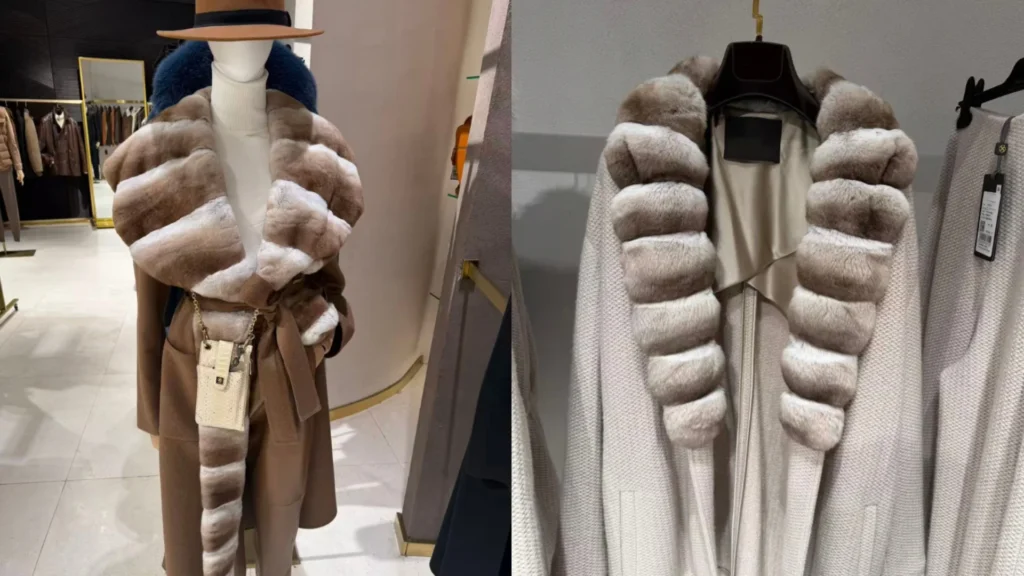
The Weight Problem Every Fur Maker Has Faced
The leather backing of a pelt carries real weight. For generations, that weight was simply accepted. A full-length mink coat is beautiful, but it is also heavy. That affects how it is worn, how long it is worn, and how comfortable it feels.
German craftsmen have decided this trade-off is no longer necessary. They are working to cut the weight without losing structure, warmth, or appearance. By most accounts, they are succeeding.
Weight has always been the quiet compromise of the fur world. German makers are the first to treat it as an engineering problem with a real answer.
How a German Fur Garment Uses Thinner Leather
The first breakthrough is in the leather itself. Traditional construction often relied on thick leather to absorb the tension when pelts are stretched and joined. German craftsmen found that with precise enough positioning and stitching, that thickness is no longer needed. The leather can be worked much thinner with no loss of strength.
The result is a German fur garment that weighs noticeably less than a similar piece built the traditional way. It keeps the same clean finish and the same durability.
Less Pelt, Less Waste
The second innovation is in how pelts are used. As German makers refined their methods, they found ways to make the same garment with fewer pelts. Waste has fallen considerably, including off-cuts, unusable sections, and pelts that never reach the final piece.
For a luxury product sourced from the world’s finest auctions, this matters for more than the environment. Getting the same result from fewer pelts is a mark of technical mastery. It also points to a future where German work sits beside the Greek tradition as its own respected school. Technology is changing other parts of the trade too, as we explain in how tech is reshaping the mink fur industry.

Pattern Compensation in the German Fur Garment
Perhaps the most impressive advance is what German craftsmen call pattern compensation. Makers study how each cut of fur falls and moves once assembled. They can then predict which pelt size and type each section needs, before a single cut is made.
This removes guesswork at every stage. The right pelt goes to the right part of the garment from the start. That reduces both excess material and the labor needed to fix errors later. It is systematic thinking applied to one of Europe’s oldest crafts.
What This Means for the Fur Garment Industry
Greece keeps its creative crown. The artistic heritage of Greek fur making cannot be engineered away. It remains the aesthetic benchmark.
Germany is building a parallel legacy. Precision, efficiency, and lower weight are real advances. For buyers who want beauty and comfort, the German approach is increasingly the technical choice.
The buyer wins either way. As both traditions evolve, the choice of world-class European fur has never been wider.
Interested in European fur from both traditions? J&A International’s Hong Kong showroom brings Greek and German craftsmanship to buyers across Asia. Every piece in our collection is CITES certified. Contact us to arrange a visit.