Sable fur commands some of the highest prices in the fur market, and that premium attracts imitation. Several animals produce fur that looks remarkably similar to sable. Knowing how to tell the difference before you buy is not optional; it is essential.
5 min read | Sable Fur | Authenticity | Buying Guide
Summary
Sable fur is one of the most coveted materials in luxury fashion, prized for its exceptional softness, its lustrous depth, and the silhouette it creates in a finished garment. That status makes it one of the most imitated, with related species like marten frequently passed off as the genuine article to buyers who do not know what to look for.
The good news is that genuine sable fur has several qualities that distinguish it clearly from its substitutes, in origin, texture, colour, price, and certification. Understanding each of these checks gives any buyer the tools to verify what they are looking at before committing to a purchase at sable prices.
1
Origin
Russia Only
True sable comes exclusively from Russia. Any fur sold as sable from another country is a different animal, most likely marten, which is native to Canada and parts of Europe. They look similar, but the texture tells them apart immediately.
2
Touch
The Direction Test
Genuine sable fur is so exceptionally soft that stroking it in any direction, including against the grain, produces almost no perceptible resistance or separation. No other fur passes this test convincingly.
3
Colour
Sable Is Never Cheap
A genuine sable vest starts at around $10,000 USD and rises sharply from there. If the price is significantly below that, the fur is almost certainly not what it claims to be, regardless of what the label says.
4
Price
Sable Is Never Cheap
A genuine sable vest starts at around $10,000 USD and rises sharply from there. If the price is significantly below that, the fur is almost certainly not what it claims to be, regardless of what the label says.
5
Certification
Ask for the SOBOL Label
The most reliable proof of genuine Russian sable is certification from SOBOL, Russia’s primary sable auction authority. A garment sourced through SOBOL carries documentation that traces the pelt to its verified Russian origin.
Why Sable Is So Frequently Imitated
The fur market has no shortage of premium materials: mink, chinchilla, and lynx cat all command serious prices. But sable fur occupies a category that few others reach, and that position makes it a consistent target for substitution.
The challenge for buyers is that the most common substitute, marten, is genuinely similar in appearance. Both animals belong to the same family. Their pelts share a general silhouette, a similar depth of fur, and colouring that, in photographs or at a casual glance, can be difficult to distinguish.
In person, with the right knowledge, the differences are clear. But without that knowledge, a buyer paying sable fur prices for marten has no easy way to know what they have purchased, and that is precisely the vulnerability that bad actors exploit.
Origin: The First and Most Important Check
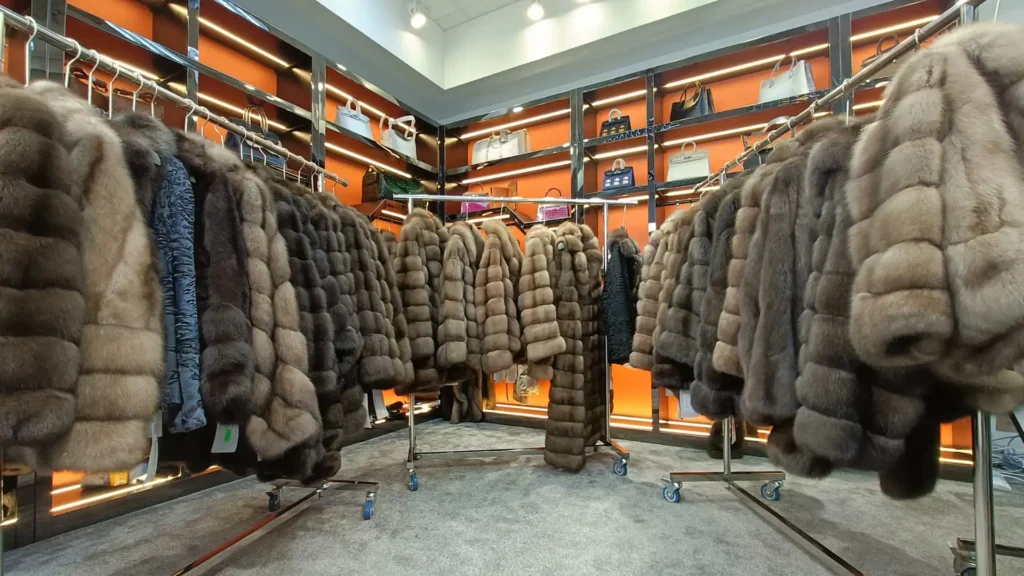
The single most important fact about sable fur authenticity is geographical: genuine sable exists only in Russia. The Martes zibellina, the species whose fur carries the sable name, is native exclusively to the Siberian forests and surrounding regions of the Russian Far East.
Any fur sold as sable from Canada, Scandinavia, or anywhere outside Russia is a different animal. American marten and European pine marten are the most common substitutes, both beautiful furs in their own right, but not sable, and not worth sable prices.
This makes origin the fastest and most reliable first check. Before you look at texture or colour, ask where the fur came from. If the answer is anything other than Russia, the conversation about whether it is genuine sable fur is already over.
Origin is not a technicality; it is the definition. Sable fur that does not come from Russia is not sable. That is the starting point for every authenticity check that follows.
Touch: The Test That Cannot Be Faked
If origin establishes where genuine sable fur comes from, touch establishes what it actually is. And the tactile quality of sable is, in practical terms, impossible to replicate in any substitute fur.
The standard test is simple: stroke the fur in any direction, including directly against the grain. In most furs, stroking against the grain produces an immediate and obvious resistance; the hairs separate, the pile disrupts, and the direction of the stroke is clearly visible. Genuine sable fur does not behave this way. It is so uniformly soft and so finely structured that the direction of the stroke becomes almost imperceptible.
No marten, no mink, no substitute passes this test convincingly. Touch is the check that separates genuine sable from every imitation, and it takes about three seconds to perform.
The multidirectional softness of sable fur is not a matter of degree; it is a qualitative difference that any buyer can feel immediately, without expertise, the moment they handle the genuine article.
Colour, Price, and Certification: The Final Three Checks
Colour provides an additional distinguishing marker. Farmed sable fur tends to be darker and more uniform in tone. Wild-hunted sable can carry lighter, more varied shading. But the most distinctive quality, the one that no substitute can replicate, is the silvery hair tip found only in genuine Russian sable. Look for that luminous, almost metallic quality at the ends of the fur. If it is absent, treat the fur with caution.
Price is a blunt but effective filter. A genuine sable vest begins at around $10,000 USD and rises significantly from there depending on fur quality, garment size, and origin grade. A price substantially below that threshold is not a bargain. it is a signal that the fur is not what it claims to be.
Certification is the clearest documentary proof available. SOBOL is Russia’s primary sable auction authority, and a garment carrying SOBOL certification can be traced to verified Russian-origin pelts. At J&A, our sable garments carry both FURMARK and SOBOL certification, documentation that removes any ambiguity about what you are buying and where it came from.
How to Buy Sable Fur With Confidence
Confirm Russian origin first. Any other answer disqualifies the fur from being genuine sable fur, regardless of what else the seller claims.
Touch it against the grain. Genuine sable passes this test with a softness that no substitute can match. If the fur resists or separates noticeably, it is not sable.
Ask for SOBOL certification. Documentation from the SOBOL auction authority is the most reliable proof of authenticity available, and any legitimate sable garment supplier should be able to provide it without hesitation.
At J&A International, every sable garment in our collection is certified by both FURMARK and SOBOL, guaranteeing Russian origin, ethical sourcing, and the quality standard that genuine sable fur demands. If you are considering a sable piece, our Hong Kong team is happy to walk you through the collection and the documentation behind every garment. Visit j-a-international.com to explore.